The Shrine
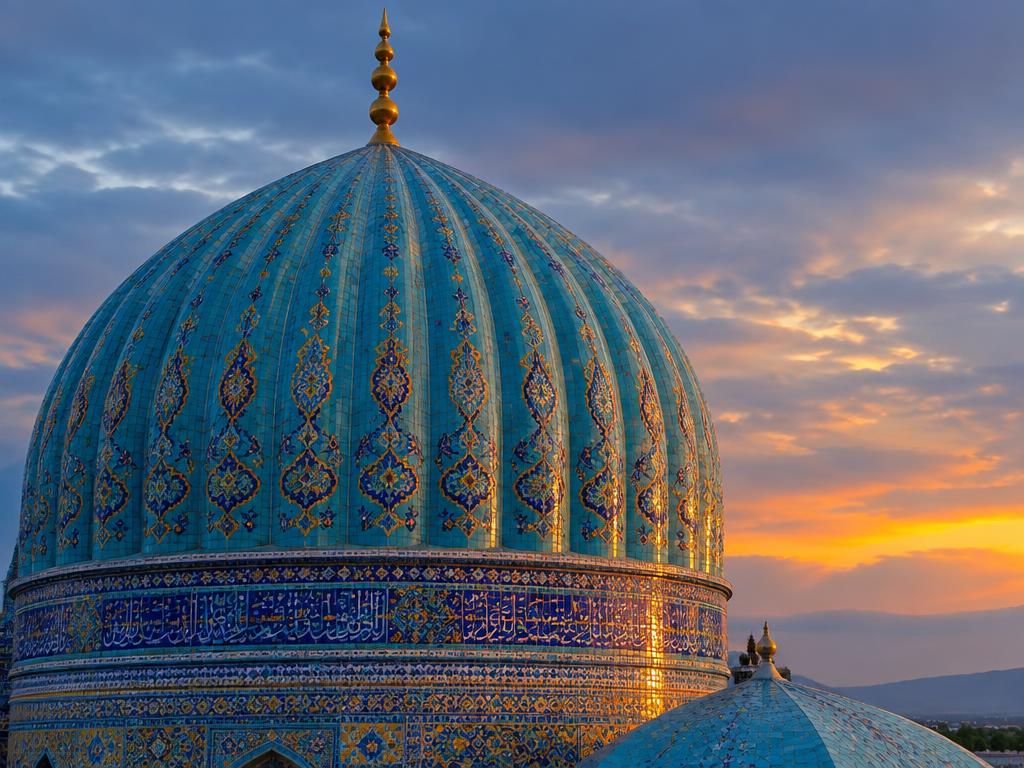
Shrine of Hazrat Ali
The Blue Mosque — Rawze-e Sharif — is the city's beating heart: a sea of turquoise tile that shifts from cobalt to gold as the day turns, its courtyard always full of pigeons and pilgrims.
Afghanistan · 36.7°N 67.1°E
A city of blue tile and golden light — where the great dome of the shrine catches the last sun and the bazaars still smell of cardamom and warm stone.
Begin the walk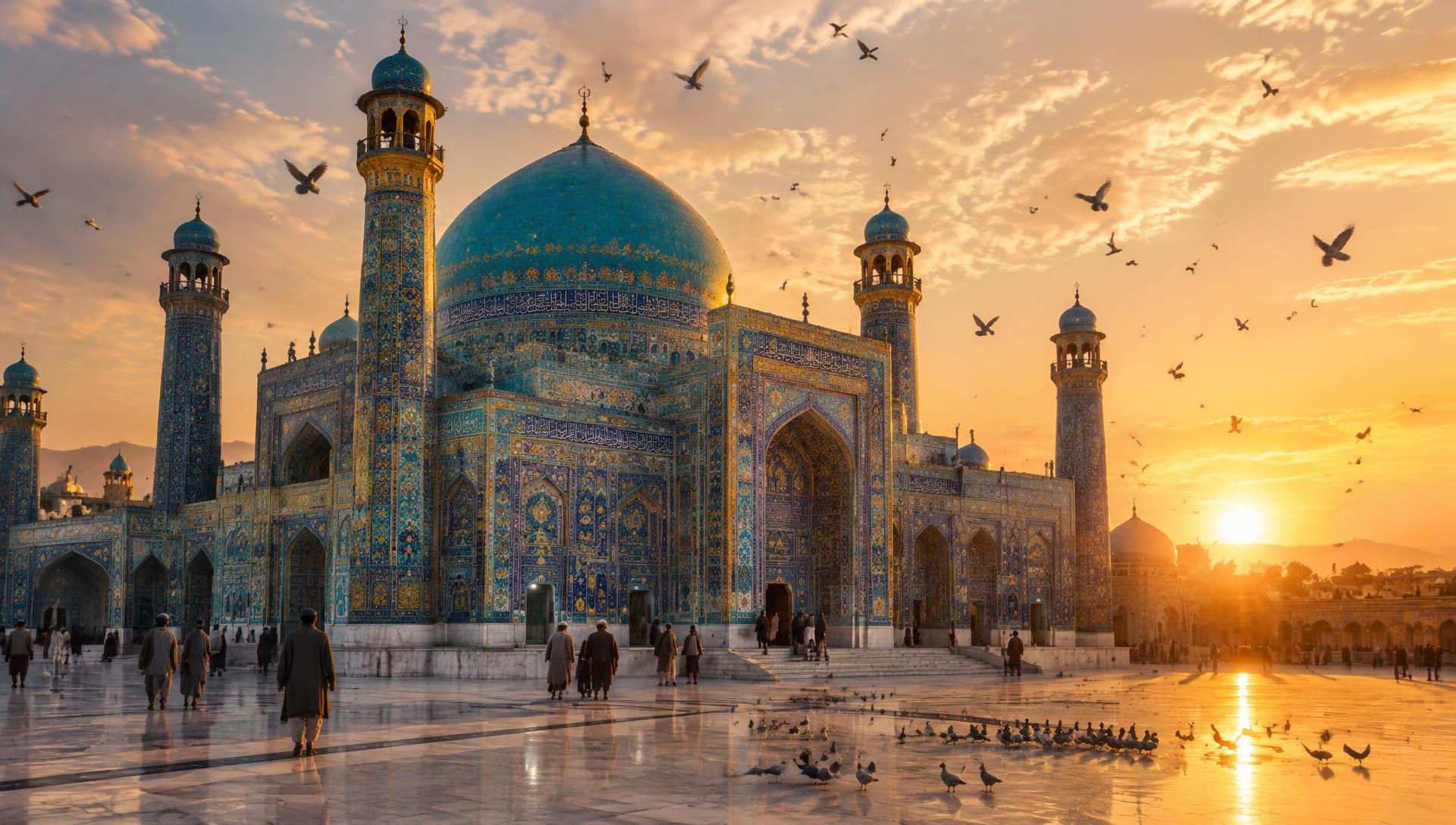
Chapter One — History
From the caravan roads of ancient Balkh to the Timurid dome that named the city, Mazar-e-Sharif's story is one of faith, trade and blue glaze.
c. 2000 BC
Long before Mazar-e-Sharif carried its name, neighboring Balkh stood as one of the oldest cities in the world — a Silk Road crossroads where traders, scholars and pilgrims met between Persia, India and China.
12th Century
A dream in the Seljuk era led to the discovery of a tomb believed to be that of Hazrat Ali, cousin and son-in-law of the Prophet Muhammad — giving the settlement its name: Mazār-e-Sharīf, 'the Noble Shrine'.
1481
Under the Timurid sultan Husayn Bayqara, the Shrine of Hazrat Ali was rebuilt and clad in its famous turquoise and cobalt glazed tile — the dome that has given the city its color ever since.
Today
Now Afghanistan's fourth-largest city, Mazar-e-Sharif remains the country's most celebrated center of pilgrimage and the stage of the great Nawruz flag-raising, when thousands gather beneath the blue dome each spring.
Chapter Two — Places to visit
Three stops carry the city's memory: a shrine of impossible blue, a neighbor older than history itself, and a bazaar that never quite sleeps.
The Shrine
The Blue Mosque — Rawze-e Sharif — is the city's beating heart: a sea of turquoise tile that shifts from cobalt to gold as the day turns, its courtyard always full of pigeons and pilgrims.
The Ruins
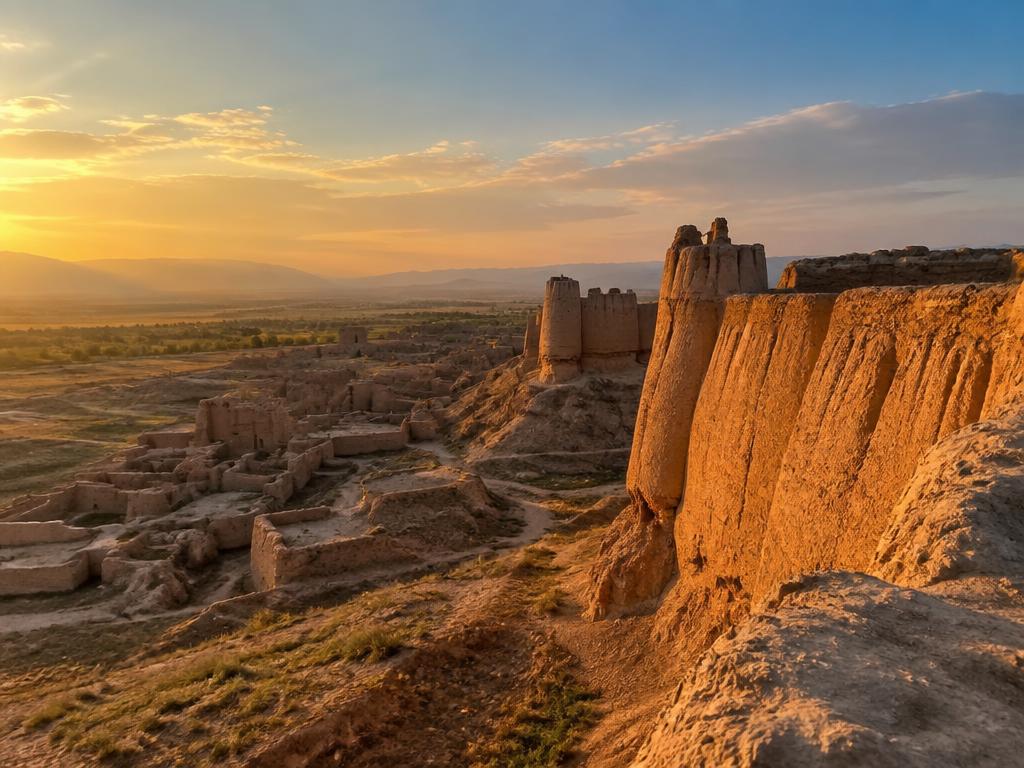
Twenty kilometers west lie the earthen ramparts of Balkh — birthplace of the poet Rumi and, by legend, of Zoroaster — where mud-brick walls still guard the plateau at sunset.
The Bazaar
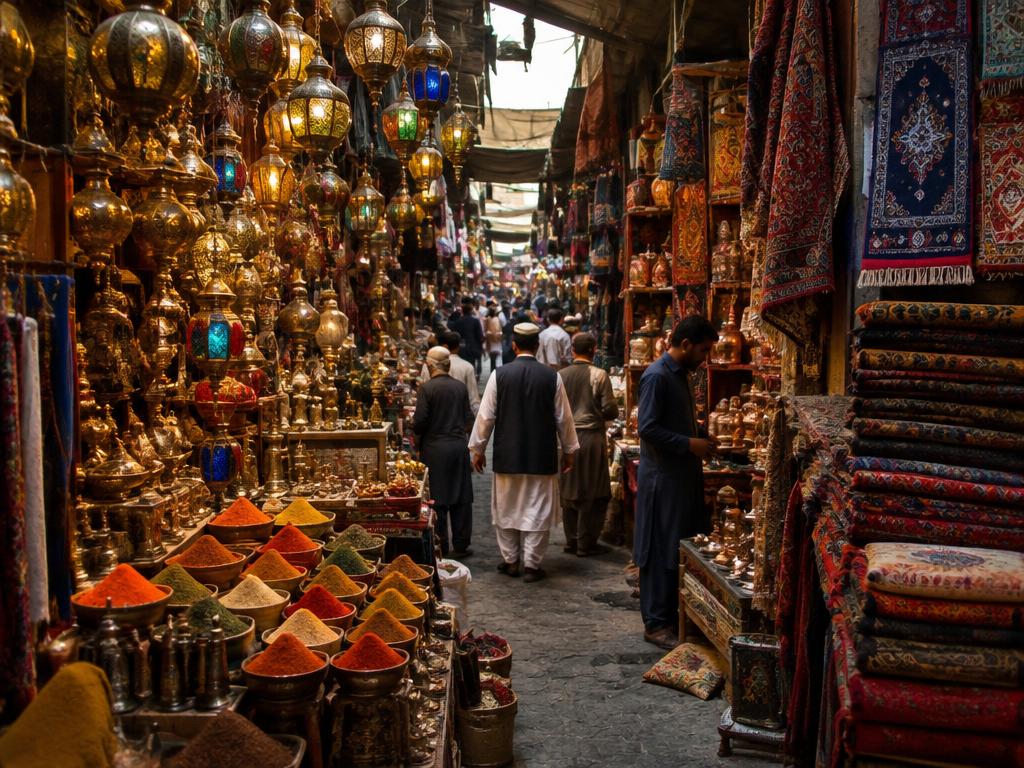
Lantern-lit lanes of spice mounds, hand-knotted carpets and beaten copper — the bazaar is where the Silk Road's trade legacy still hums through daily life.
Chapter Three — Local foods
Mazar's cooking is northern Afghan cooking at its richest — saffron rice, folded dumplings and tea that is always poured for one more guest.
01
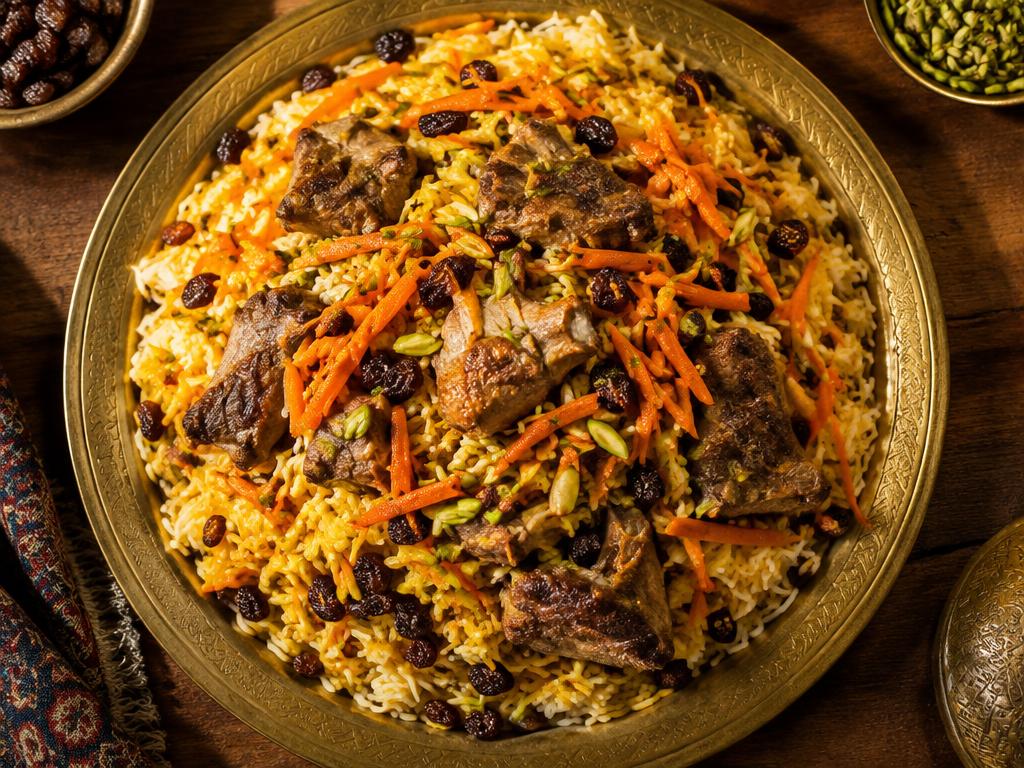
Fragrant saffron rice layered with tender lamb, caramelized carrots and raisins, crowned with pistachios — the centerpiece of every celebration.
02
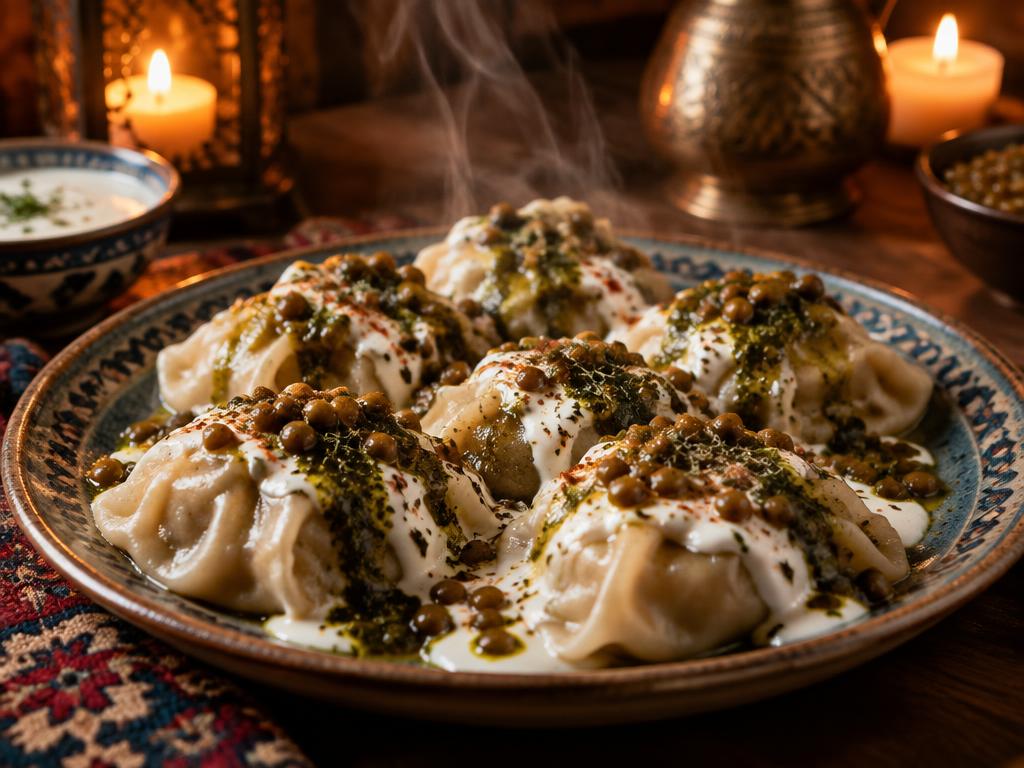
Delicate hand-folded dumplings of spiced meat, steamed and drowned in garlic yogurt, lentils and dried-mint oil — the bazaar's favorite comfort dish.
03
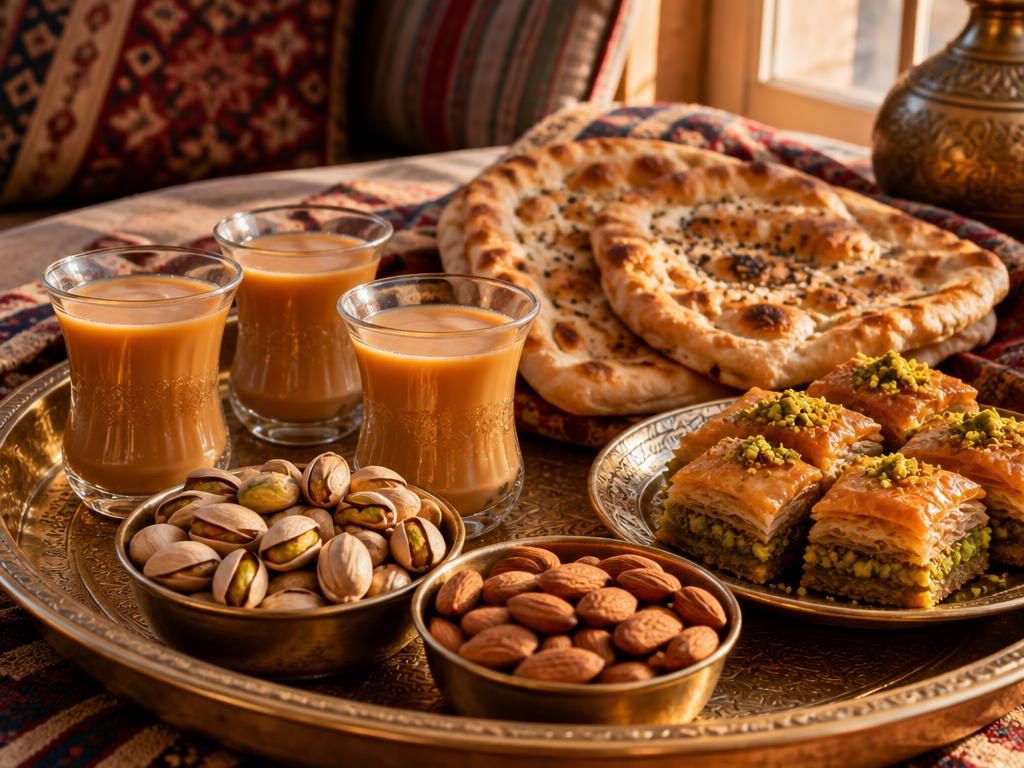
Strong tea in small glasses, poured generously and shared with naan, baklava and pistachios — the daily ritual of Afghan hospitality.